
Last updated November 22, 2026
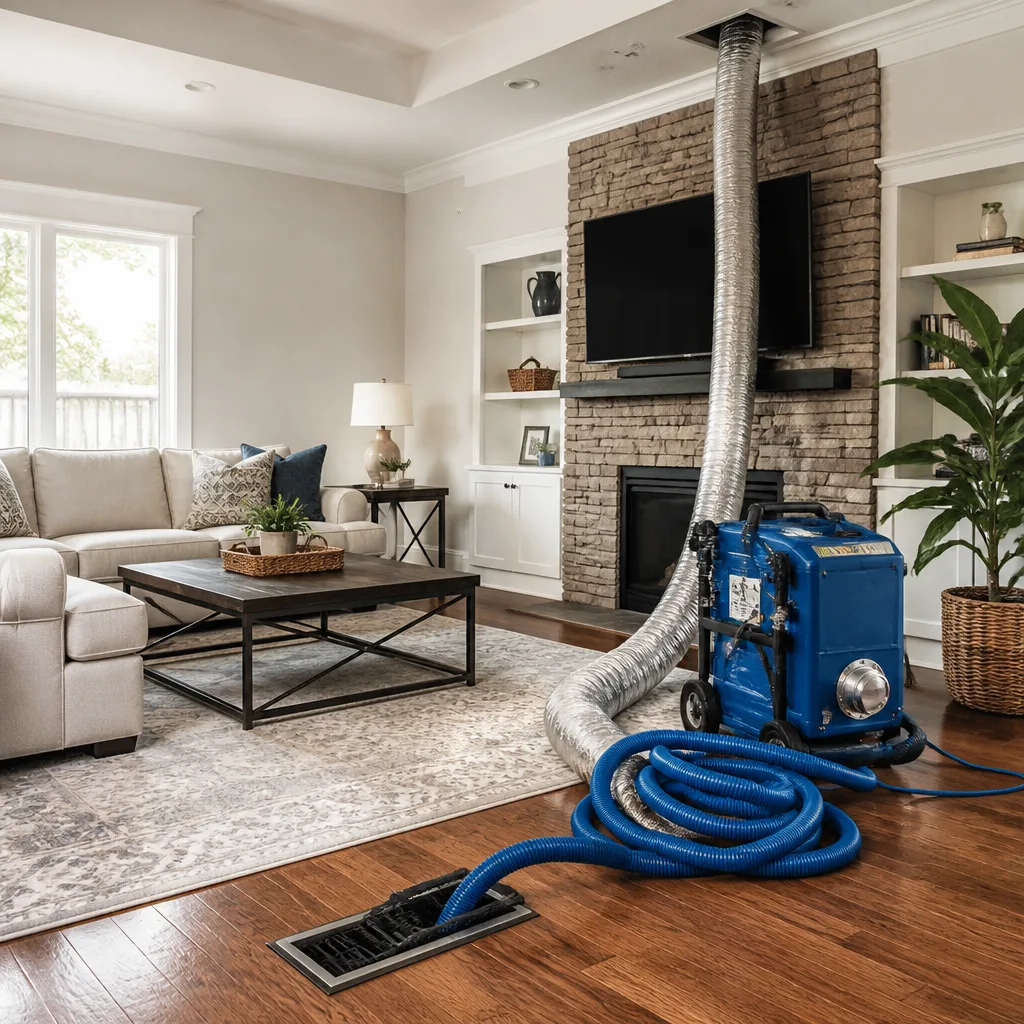 Whole-home duct cleaning
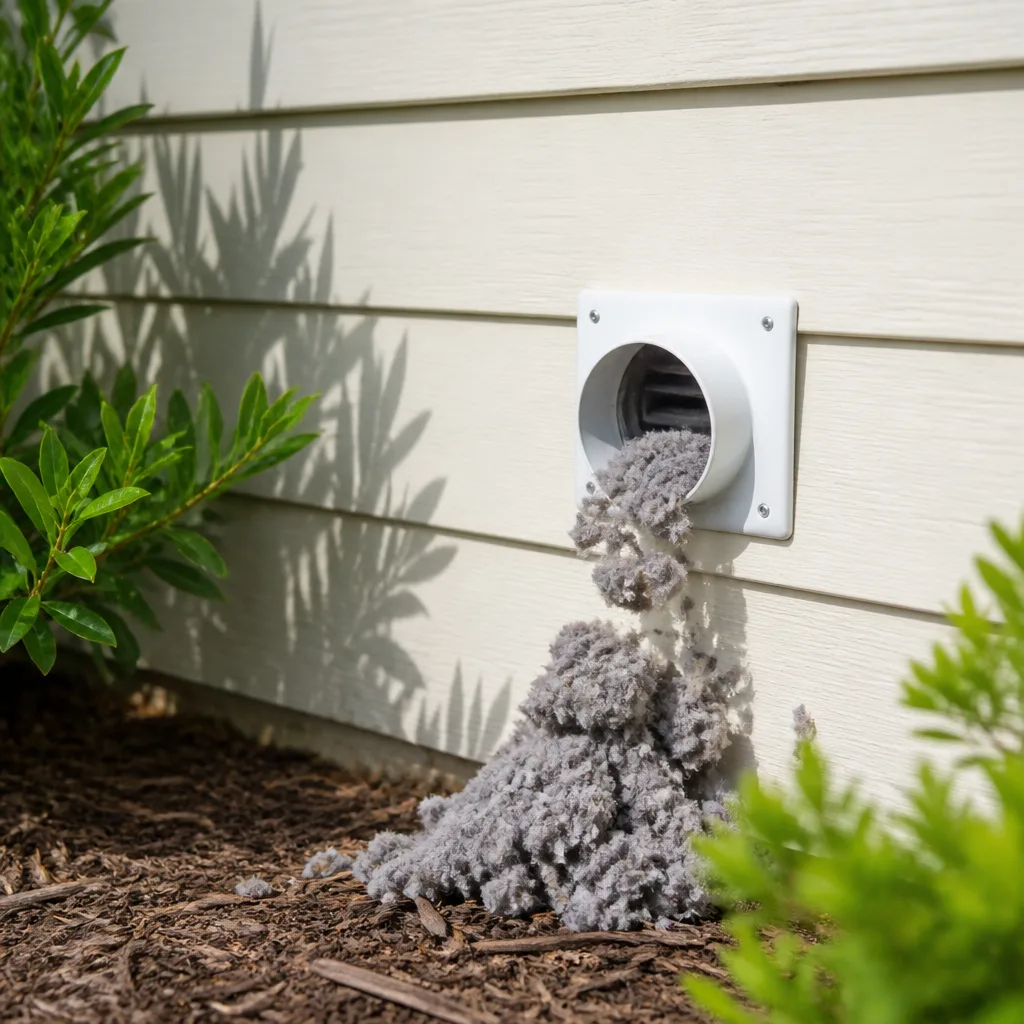 Dryer vent cleaning
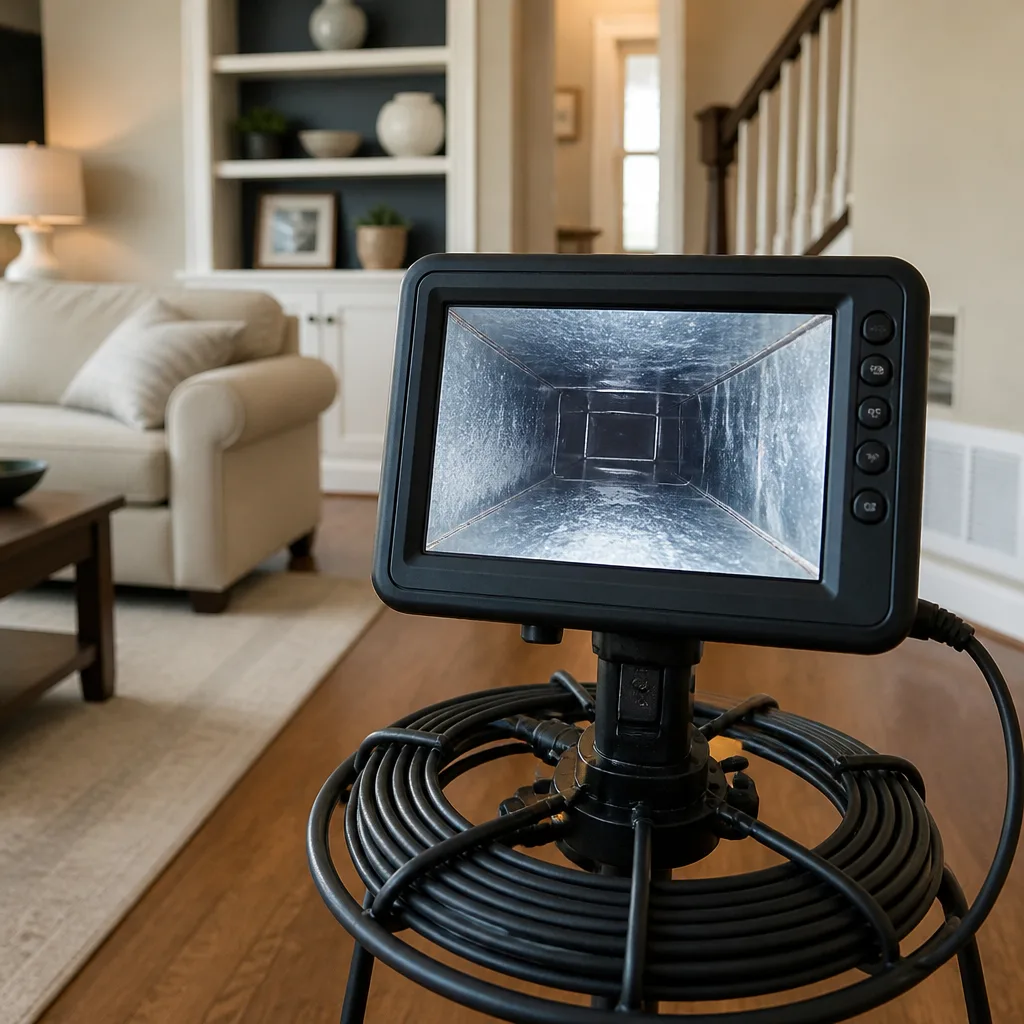 Camera inspection
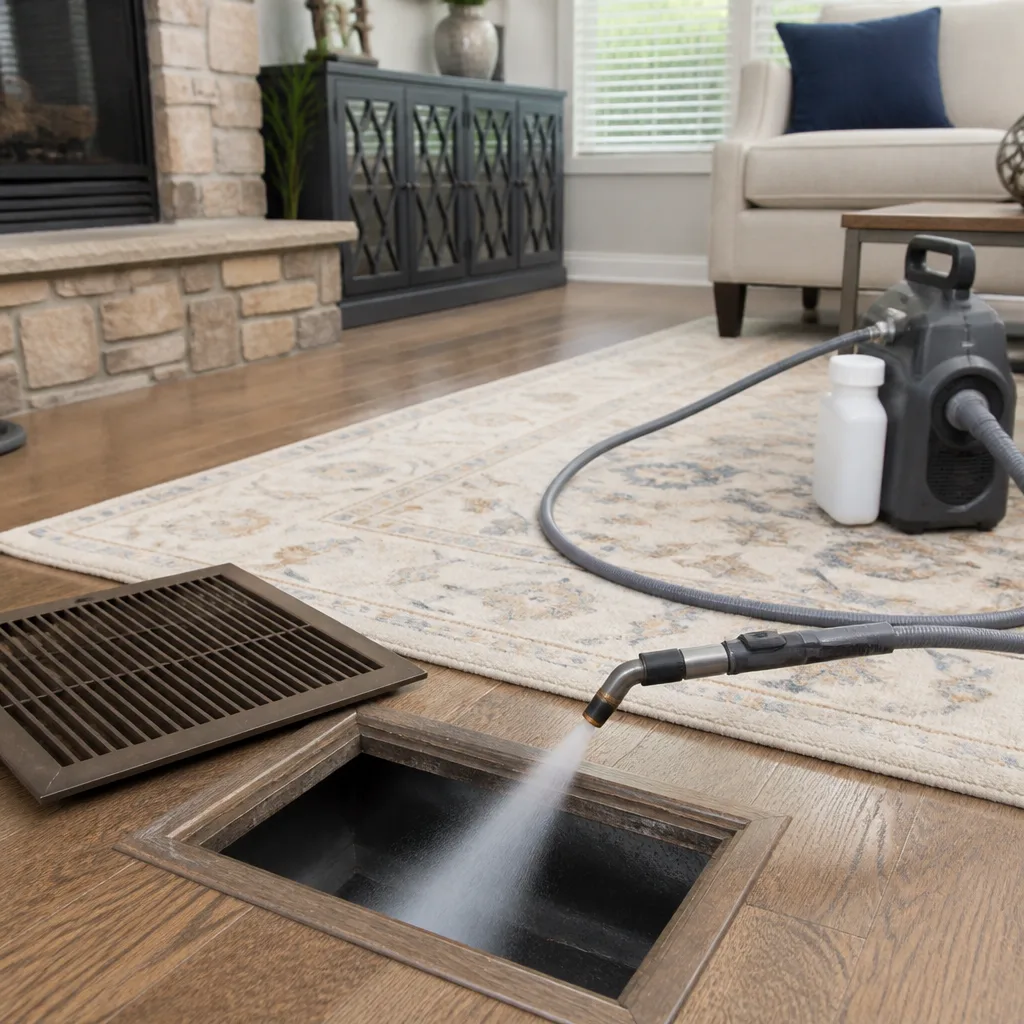 Sanitizing & deodorizing
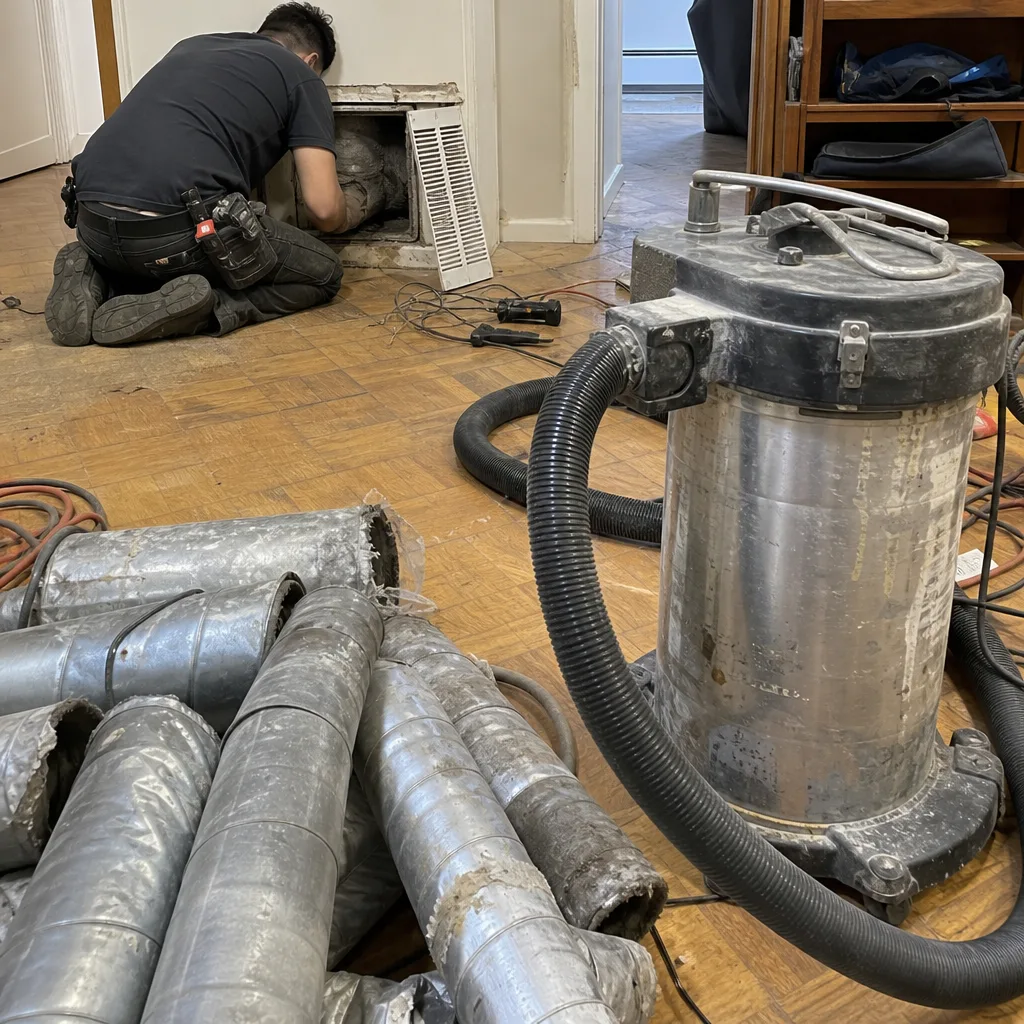
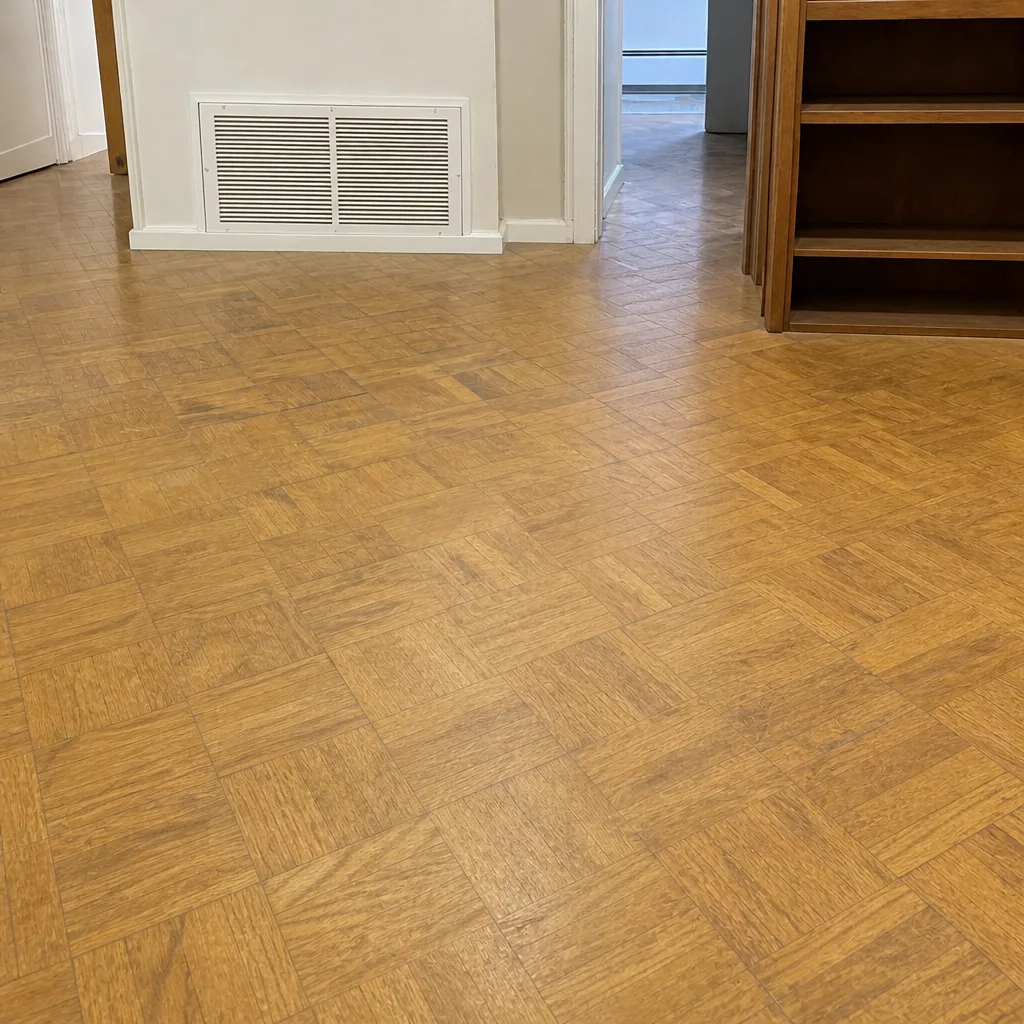
Whole-system duct and dryer vent check with before-and-after photos - you see exactly what came out of your vents
That "$99 whole-house special" is a bait ad - the real number appears once they are in your hallway, or the "clean" is a shop-vac at the register. We photograph the inside of your ducts before and after instead.
Air Duct Cleaning Warning Signs: A Hell’s Kitchen Homeowner’s Reference Guide
Walk into almost any apartment in Hell’s Kitchen and you’ll find a ceiling register with a dark halo around it. The usual explanation is “city soot” or “old building.” Sometimes that’s true. But the same smudge pattern also shows up when a duct system is actively pushing contaminated air back into the room, and those two explanations call for completely different responses. One is cosmetic. The other means the system is redistributing what it collects. This guide covers the signs that actually point to duct problems, the mechanical reasons behind each one, and how to tell the difference before you spend money on a cleaning you may or may not need.
Quick Answer
The reliable warning signs of a duct system that needs professional attention in Hell’s Kitchen are: staining that radiates outward from a register rather than settling on top of it, odors that appear at specific registers when the system runs, allergy symptoms that track with HVAC operation, visible debris blowing from supply registers at startup, and repeated dust settling faster in one room than the rest of the apartment. Any one of these is worth a look. Three or more together means it’s time for an inspection.
Styles & brands we work with
- Whole-home duct cleaning
- Dryer vent cleaning
- Camera inspection
- Sanitizing & deodorizing
Table of Contents
- What Register Staining Patterns Actually Tell You
- Differential Smell Mapping: Finding Where the Problem Lives
- Symptom Patterns That Track With HVAC Operation
- Debris in the Airflow: Reading Particle Size and Color
- Multi-Unit Buildings: One Unit’s Problem or the Whole Building’s?
- The Five-Point Inspection: What a Real Assessment Looks Like
- Renovation Dust and Why Hell’s Kitchen Apartments Get Hit Harder
- Common Mistakes to Avoid
- When to Call a Professional
What Register Staining Patterns Actually Tell You
Staining around a ceiling register comes from two very different mechanisms, and the shape of the deposit is how you tell them apart. Urban particulate deposition, the everyday dust and exhaust residue that settles out of Hell’s Kitchen air, lands on surfaces from above. It collects on the top face of the register grille, on the blades, and on the ceiling directly beneath the grille where gravity carries it. It tends to be uniform in color, gray to brown, and it wipes off easily because it’s sitting on the surface rather than bonded to it.
Internal duct contamination behaves differently. When a supply run has a cracked joint, a failed seal at the boot, or a buildup that’s been disturbed by airflow, particles are pushed out under pressure. That deposits them in a radiating pattern: a ring or halo that spreads outward from the register edge, darker close to the gap where air escapes, lighter at the outer edge. You may also see streaking on the ceiling along the direction the air actually travels. It can look almost like a water stain but dry and dusty to the touch.
Three things to check:
- Location of the heaviest deposit. On top of the grille means deposition. Around and behind the grille edge means blowout.
- Symmetry. A clean register with a dirty ring right around it is the classic pressure-escape signature. A grille that’s uniformly dingy is ordinary urban dust.
- Which registers. If only the runs at the end of a duct branch show halos while the ones near the air handler are clean, that points to pressure loss or leaks along the branch. If every register in a Hell’s Kitchen apartment shows the same ring, the contamination is likely upstream in the main trunk.
None of this requires tools. A phone flashlight held at an angle to the ceiling will show you the pattern in seconds. What matters is that you read it correctly before deciding what kind of service you need.
Differential Smell Mapping: Finding Where the Problem Lives
A smell that fills the whole apartment is usually not coming from your ducts. Cooking, garbage, and the general character of a Hell’s Kitchen building’s shared spaces produce ambient odors that duct cleaning will not fix. The useful signal is a smell that appears at specific registers when the system runs and fades when it stops. That’s a location problem, and it’s solvable.
Here’s how to map it. Turn the system off and let the apartment settle for a few minutes. Walk to each supply and return register and smell directly at the grille. Whatever you notice with the system off is background. Now turn the system on and repeat the walk in the same order. A musty, damp, or sour smell that shows up at one or two registers but not the others tells you the contamination is local to that branch run. Maybe a section of flex duct has sagged and collected moisture. Maybe a joint has opened and drawn in air from a wall cavity.
A smell that appears at every register the moment the blower starts points upstream: the main trunk, the air handler cabinet, or the evaporator coil. A wet-sock or dirty-laundry smell concentrated at the return is often coil or drain pan related rather than ductwork, which means HVAC cleaning of the coil and cabinet is the fix, not duct cleaning alone. A dry, dusty, metallic smell at startup is usually settled particulate getting stirred up for the first time in a while.
The distinction matters because treating the wrong location wastes the work. If the source sits at the coil and you clean the branch runs, the smell comes back in weeks. Our approach is to test before and after at the same registers so you can smell the difference for yourself. Negative-air containment with Abatement Technologies equipment keeps the disturbance from spreading through the apartment while the work is happening.
Symptom Patterns That Track With HVAC Operation
Indoor air quality complaints get dismissed constantly in Hell’s Kitchen because the symptoms look like ordinary seasonal allergies. The differentiator is timing. If your congestion, sneezing, itchy eyes, or throat irritation gets worse during the hours the heat or air conditioning is running and eases when the system is off, the HVAC system is a plausible contributor. If the symptoms are the same whether the system runs or not, the cause is more likely outside the ductwork: pets, pollen, mold elsewhere in the unit, or a building-wide ventilation issue.
A few patterns worth paying attention to:
- Symptoms that start within an hour of the system kicking on. That near-immediate timing points to what’s in the ducts or the filter housing, because that’s what enters the room when the blower engages.
- Symptoms that improve when you leave the apartment for a full day. Suggests the indoor environment, not your body, is the variable.
- Symptoms that are worst in the room closest to the return. Contamination at the return or the air handler is the likely source.
- Symptoms shared by everyone in the household. One person reacting is often personal sensitivity. Multiple people reacting is the environment.
What we don’t do is diagnose health conditions. If the symptom pattern is consistent, a technician can confirm whether contamination exists and where. Post-clean sanitizing with Guardsman products addresses allergens, mold spores, and microbial contamination at the source. For whole-home filtration and humidity control, systems from Honeywell and Aprilaire are worth discussing with whoever services your HVAC, because filtration upgrades often matter more to a sensitive occupant than a single cleaning does.
Debris in the Airflow: Reading Particle Size and Color
Watching what comes out of a supply register at startup is one of the most information-dense diagnostic moments you get. Do it on a sunny day with the curtains open and the system off. Let the room go still. Then bring the system on and sit facing a register from about three feet away. What you see in the first thirty seconds tells you a lot.
Fine gray or brown dust that drifts rather than shoots is ordinary settled particulate being redistributed. Most Hell’s Kitchen apartments with old systems show some of this. It’s a sign the ducts are due for cleaning but not a sign of failure.
Coarse, white or off-white dust has a distinct source. Around renovations, drywall cutting produces a fine gypsum dust that migrates into any open duct. If the apartment next door or the floor above has been gutted and the ducts share a chase, that dust routinely finds its way in. Bumping the duct circuit back to clean after a renovation is routine work, but it’s different work than an ordinary clean.
Dark, fluffy, or fibrous debris in the airflow, especially with a musty smell, points to biological growth. That usually means moisture somewhere: a condensate leak, a duct running through a humid wall cavity, or a flood years back that was never addressed. Cleaning alone won’t hold if the moisture source is live, which is why air duct cleaning on these jobs is paired with a moisture check.
Rust-colored particles or a metallic smell often means mechanical wear somewhere: a failing blower, deteriorating internal insulation, or rusted sheet metal flaking. Those get identified during the inspection, because cleaning the ducts when the source is failing hardware just clears the way for it to happen again.
Multi-Unit Buildings: One Unit’s Problem or the Whole Building’s?
Hell’s Kitchen has a lot of prewar walk-ups and mid-rise co-ops where the ductwork doesn’t stop at your wall. Some buildings run shared risers. Others have independent units but share a chase, a mechanical shaft, or a rooftop air handler. Knowing which situation you’re in changes both the response and the cost.
Three signs it’s an isolated unit problem:
- Warning signs (staining, odor, debris) appear in your apartment only, and neighbors on the same line report nothing.
- The smell or dust correlates with something that happened inside your unit: a renovation, a new filter, a move-in, a change in how often you’re running the system.
- Your return is dedicated to your unit, and there’s no obvious crossover at the air handler.
Three signs it’s building-wide:
- Neighbors directly above or below you, or on the same stack, describe the same smell or the same dust pattern.
- The contamination appears in public spaces: hallways, stairwells, or a shared laundry room.
- Your unit’s air handler is one of several served by the same rooftop equipment, and neighbors describe the same symptom starting at the same time.
Why the distinction matters: in a building-wide problem, cleaning a single unit is a temporary fix at best. The contamination comes right back. In a co-op or condo, remediation responsibility depends on whether the equipment and ductwork are common elements or unit-owned, and that varies building by building. A management company or building engineer should be involved in that conversation, and we’re happy to give a tech’s assessment of where the contamination sits so the board or manager has something factual to work from.
In a single-unit problem, the work is straightforward and the scope is clear. We establish containment before we start so that whatever we’re disturbing doesn’t migrate into neighboring units or hallways. Abatement Technologies containment units and Nikro negative-air vacuums are built for exactly this kind of job: keep the contamination inside the work zone, then remove it.
The Five-Point Inspection: What a Real Assessment Looks Like
If you’re going to have someone out, you should know what a credible inspection involves. Here are five checks you can insist on, and what a technician is doing during each one.
- Register-by-register airflow check. How much air is coming out of each supply, and how does it compare across rooms? Uneven airflow points to leaks, blockages, or a failing damper. This step alone finds most of the problems that get described as “bad ductwork.”
- Return-to-supply pressure check. A pressure imbalance across the system tells you whether the ducts are sealed or losing air. It also gives a baseline so you can confirm improvement after work.
- Interior duct inspection with a camera. The section closest to the air handler and the longest branch run get looked at from the inside. This is where a camera shows the difference between a light dust film, which is normal, and heavy accumulation, which isn’t.
- Coil and cabinet inspection. The evaporator coil and blower cabinet often hold more contamination than the ducts themselves. If the technician doesn’t look at these, the job is unfinished by design.
- Containment and negative-air plan. For any real cleaning, the assessment should describe how the work area will be contained and how air will be kept at negative pressure during the work. That’s the difference between cleaning a duct system and spreading the dirt through an apartment.
If you’re considering air duct cleaning in Hell’s Kitchen, ask during the estimate which of these five points will be part of the visit. Our technicians have up to 14 years of experience, and they run all five on every assessment. Rotobrush rotary-brush equipment handles the physical removal inside the ducts; the Nikro vacuums pull the loosened material out of the system; the containment keeps it from going anywhere else in the process.
Renovation Dust and Why Hell’s Kitchen Apartments Get Hit Harder
Hell’s Kitchen has had near-continuous renovation for years, and the fallout lands in neighbors’ ducts as reliably as it lands in their hallways. When a unit next door gets gutted, drywall dust and construction particulate spread through shared wall cavities, chases, and sometimes shared return air. Even when the contractor runs proper plastic and HEPA filtration, some migration happens. In buildings where the units share any duct path, this shows up within days.
What you can actually do about it:
- Change the filter when the neighboring work finishes, not before. A filter loaded with construction dust is no longer filtering; it’s a source.
- Run the system less during active demolition if you can. Contamination enters through the returns, so less runtime means less draw on the ducts.
- Get the ducts cleaned after the dust settles. Wait until the renovation is closed up. Cleaning mid-project just gives the new dust somewhere to land.
- Check the dryer vent at the same time. If your apartment had a renovation, the dryer vent probably hasn’t been inspected since either. dryer vent cleaning is a fire-safety service and belongs on the same visit.
Post-renovation is also the right time to ask about sanitizing. Fine construction dust carries more than gypsum; it also carries whatever was in the cavity walls. Guardsman sanitizing after the physical clean addresses what’s left behind.
Common Mistakes to Avoid
- Booking a cleaning based on a coupon price without knowing the scope. A number that doesn’t include the coil, the return, or the sanitizing isn’t the same job. Ask what the estimate covers before you compare prices. One flat price per system, agreed before work starts, is what protects you from the invoice that doubles once the technician is in the door.
- Cleaning when the real problem is a leak. Duct sealing or duct repair is sometimes the actual fix. In Hell’s Kitchen apartments with cracked joints or sagging flex runs, cleaning alone won’t hold if air is escaping or entering through a gap. A test before cleaning tells you which one you’re dealing with.
- Assuming a smell in the unit is a duct problem. Odors at every register when the system is off usually aren’t coming from the ducts. Mapping where the smell appears is more useful than guessing at the source.
- Cleaning the ducts but skipping the air handler. The coil and blower cabinet hold as much contamination as the ducts. If the technician isn’t opening them, you’re getting half the job.
- Skipping the dryer vent because the ducts are already being done. The dryer vent is a fire-safety item and it’s a separate channel. Lint accumulation in a dryer vent doesn’t show up in the AC register until it’s already dangerous. Bundle it with the duct visit and it’s done right alongside.
- Not taking photos before and after. You should have visual confirmation of what your ducts looked like before and after, not just a technician’s assurance. Ask for it. If the work was genuinely done, the technician will be glad to show you.
- Cleaning a unit’s ducts when the problem is in the building. In a Hell’s Kitchen co-op, cleaning one apartment won’t fix contamination that’s in the shared riser or the rooftop unit. Involve the building manager and get the scope right.
When to Call a Professional
Call before treating anything as routine if you have any of the following: a register-halo pattern that’s spread over more than a few inches, an odor that appears at specific registers only when the system runs, visible debris in the airflow at startup, symptoms in the household that track with HVAC operation, or a renovation next door or upstairs that just closed up. In any of those cases, guessing at the cause gets expensive fast. Air Duct Cleaning Hell’s Kitchen offers free estimates in Hell’s Kitchen. Call (833) 468-5937. We answer 24/7. Fast dispatch from 7am to 7pm, Sunday through Friday. Anyone quoting a price before they’ve looked at the return, the coil, and the longest branch run is quoting a scope they haven’t confirmed.
See the difference
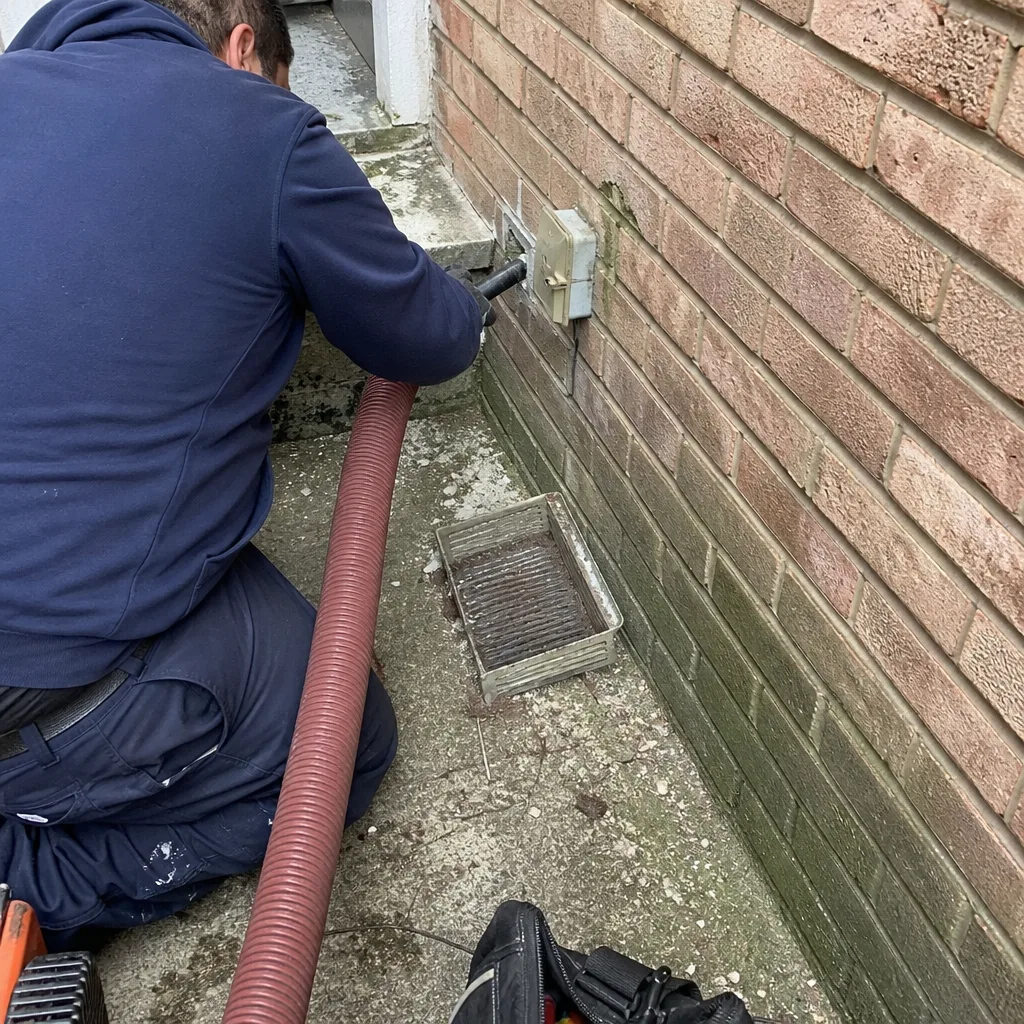 Before
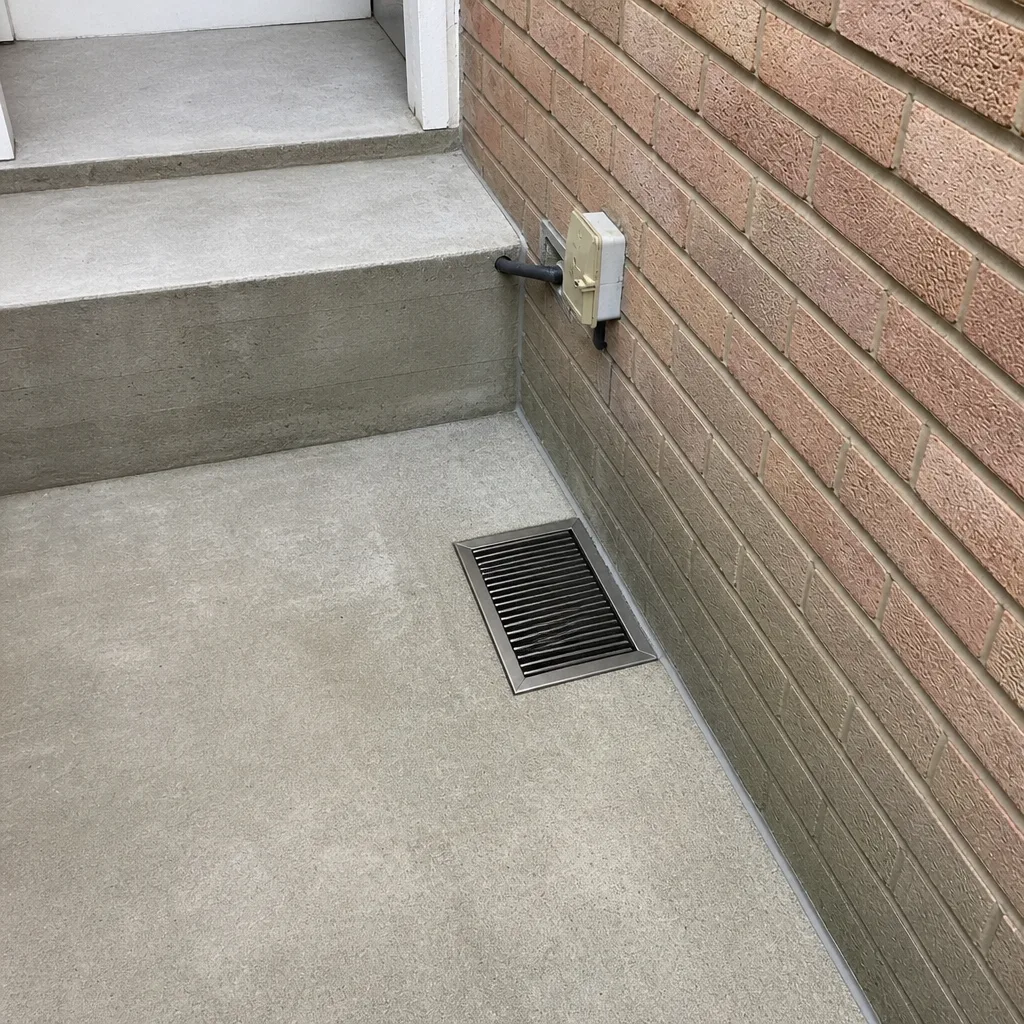 After
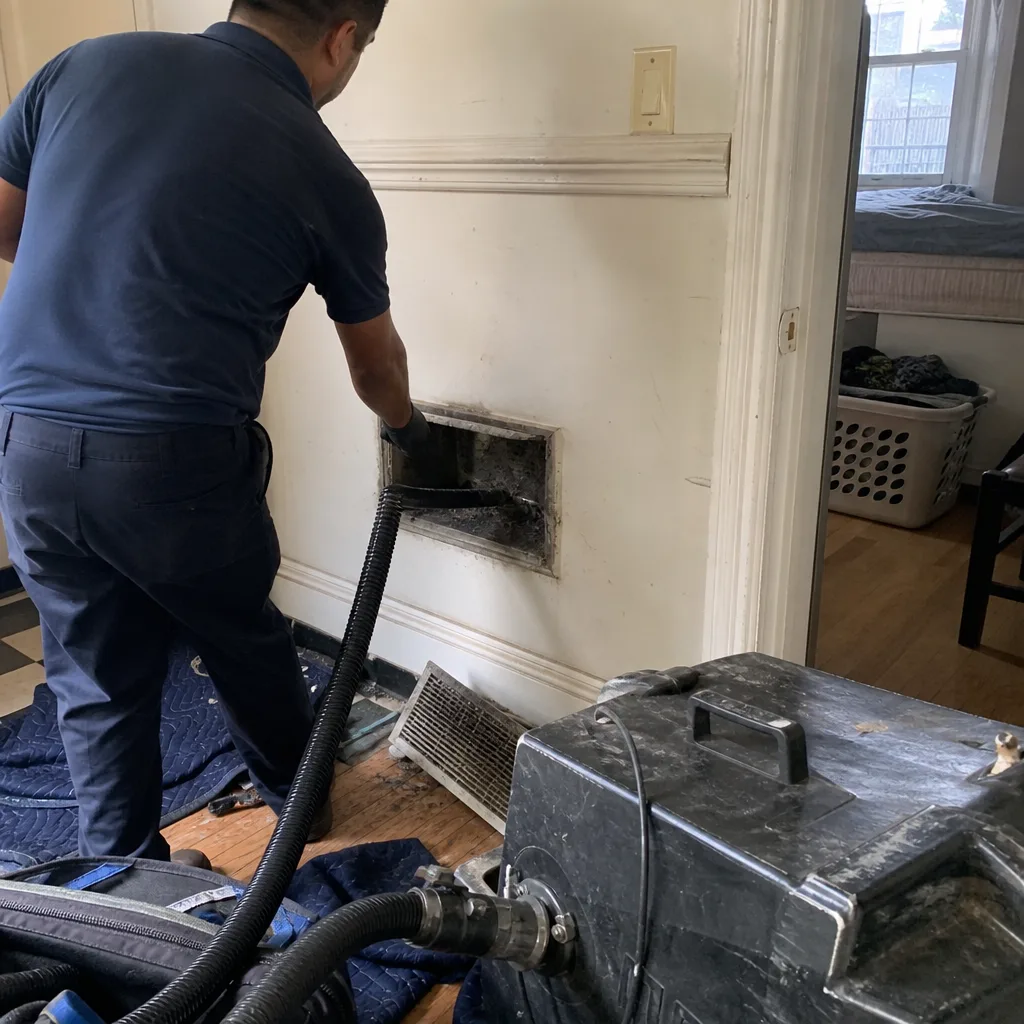 Before
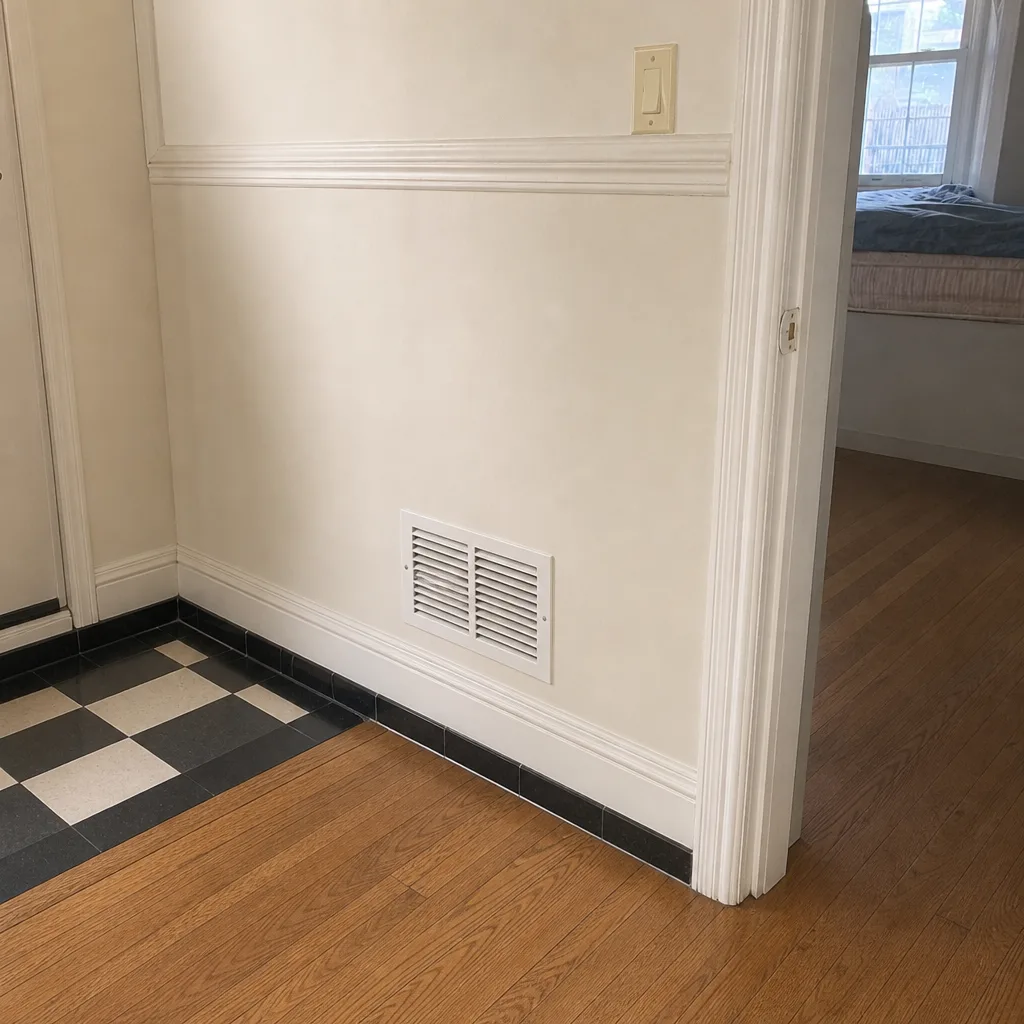 After
 Before
 After
Frequently Asked Questions
You need duct cleaning when you can point to specific signs: a halo-shaped stain spreading outward from a register, a smell that appears at some registers when the system runs, visible debris at startup, or symptoms that track with HVAC operation. Not when the ducts are merely old. Age alone isn’t a reason. Many Hell’s Kitchen buildings have ductwork older than anyone in them, and if the ducts are intact and the airflow is even, cleaning is optional. Call (833) 468-5937 for a free estimate if you’re unsure which category you fall into.
Sometimes. Urban particulate settles out of Hell’s Kitchen air and leaves soft gray-brown deposits on registers and ceilings. The tell is the shape. If the deposit is on the grille and just below it, that’s ordinary accumulation. If it forms a ring radiating outward from around the register edge, that’s dust being pushed out under pressure, which means the ductwork has a gap or a leak somewhere upstream. The second case warrants an inspection.
Because they cover a different job. A low quote frequently doesn’t include the air handler, the sanitizing, the containment, or the duct sealing that the job may need. The right comparison is the scope, not the number. One flat price per system, agreed before work starts and confirmed by a written estimate, protects you from the invoice that grows once work begins. Call (833) 468-5937 for a free estimate with a clear scope. Estimates are free.
For most Hell’s Kitchen apartments, every few years is generous. There’s no fixed interval that applies to every home. What matters more than a schedule is whether the symptoms are present: a renovation that just wrapped, a smell that keeps returning, a filter that loads up faster than neighbor’s. If none of those are happening, a prompt to clean is probably a sales prompt. Call (833) 468-5937 for a free estimate and we’ll tell you honestly whether the work is due.
It can help if the ducts are a real source. If your symptoms get worse when the system runs and ease when it’s off, cleaning and sanitizing can make a measurable difference. If your symptoms are the same regardless of whether the system runs, duct cleaning won’t solve them. We confirm the source before recommending the service. Post-clean sanitizing with Guardsman products targets allergens and microbial contamination at the source; filtration upgrades with Honeywell and Aprilaire are a separate conversation with whoever services your HVAC.
Duct cleaning removes contamination from inside the ducts. Duct repair and sealing fixes the leaks, disconnected joints, and sagging sections that let contamination in or let conditioned air escape. If a technician finds a leaking joint during cleaning and doesn’t fix it, the contamination comes back. The two often need to happen on the same visit, which is why we offer both as part of one scope instead of pushing a separate call for each.
The Bottom Line
Most warning sign lists are vague enough to apply to any city, and that’s the problem. In Hell’s Kitchen, the signs that actually matter are specific: halo-shaped staining radiating from a register edge, odors that go register-specific when the system runs, symptoms that track with HVAC operation, debris color and size at startup, and whether the problem sits in one unit or in the building. Each of those has a mechanical explanation and a distinct response. When the signs are there, the right move is a proper inspection by someone using professional equipment, not a coupon. Call (833) 468-5937 for a free estimate. We answer 24/7. Fast dispatch from 7am to 7pm, Sunday through Friday.
Written by the team at Air Duct Cleaning Hell’s Kitchen.