
Last updated November 22, 2026
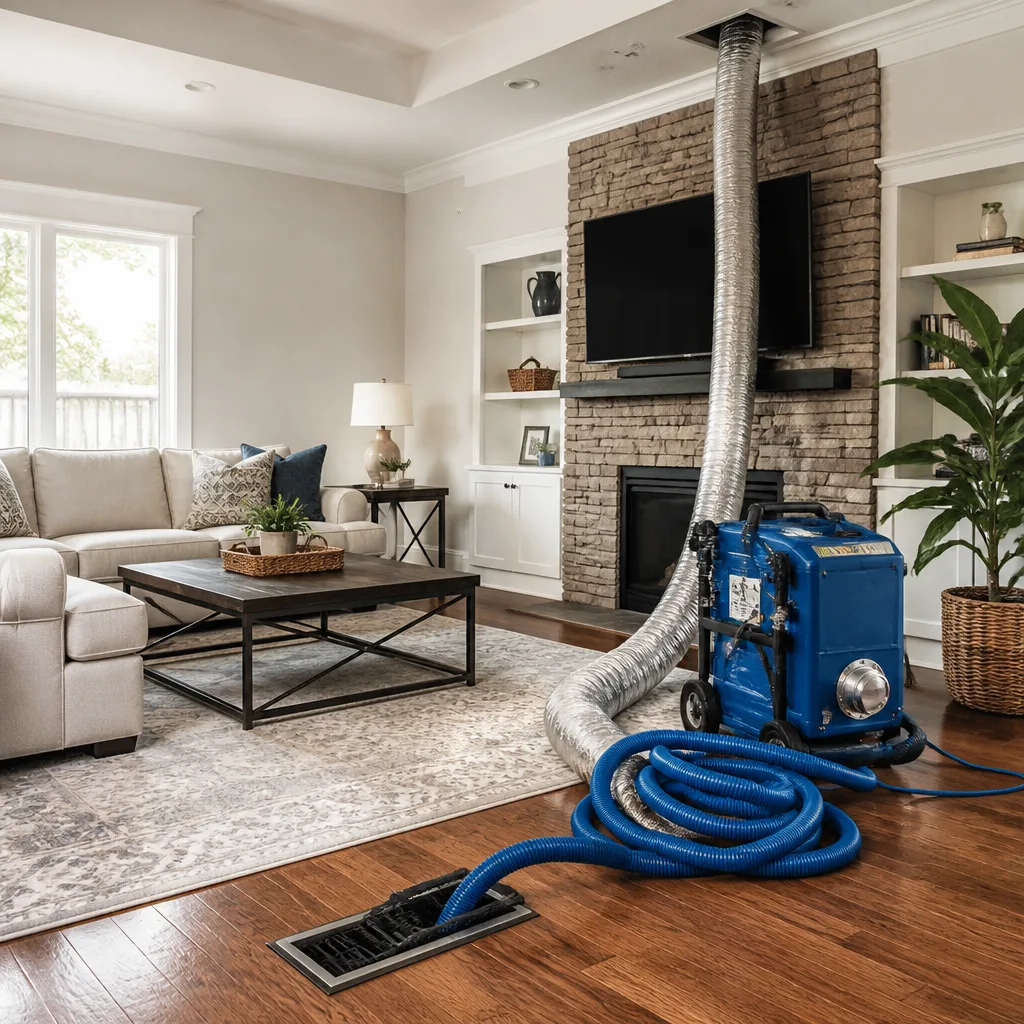 Whole-home duct cleaning
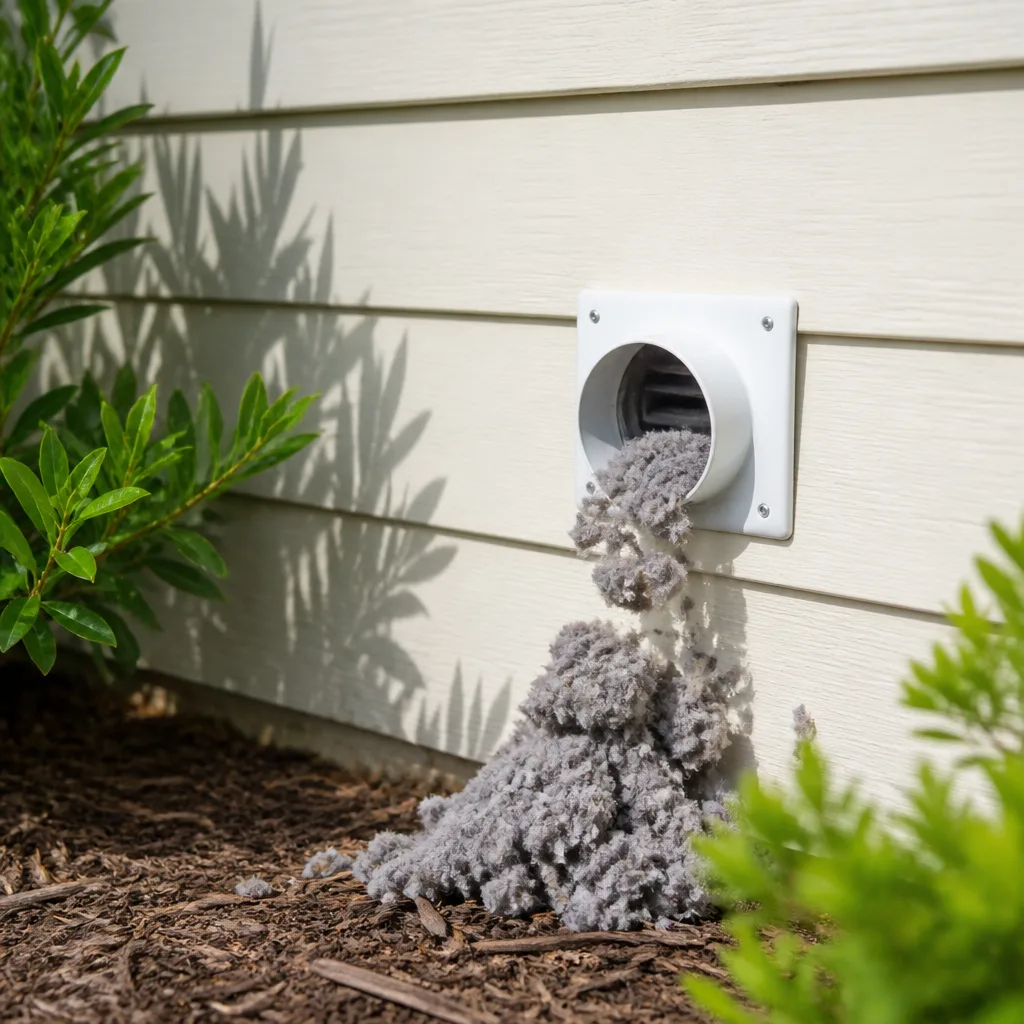 Dryer vent cleaning
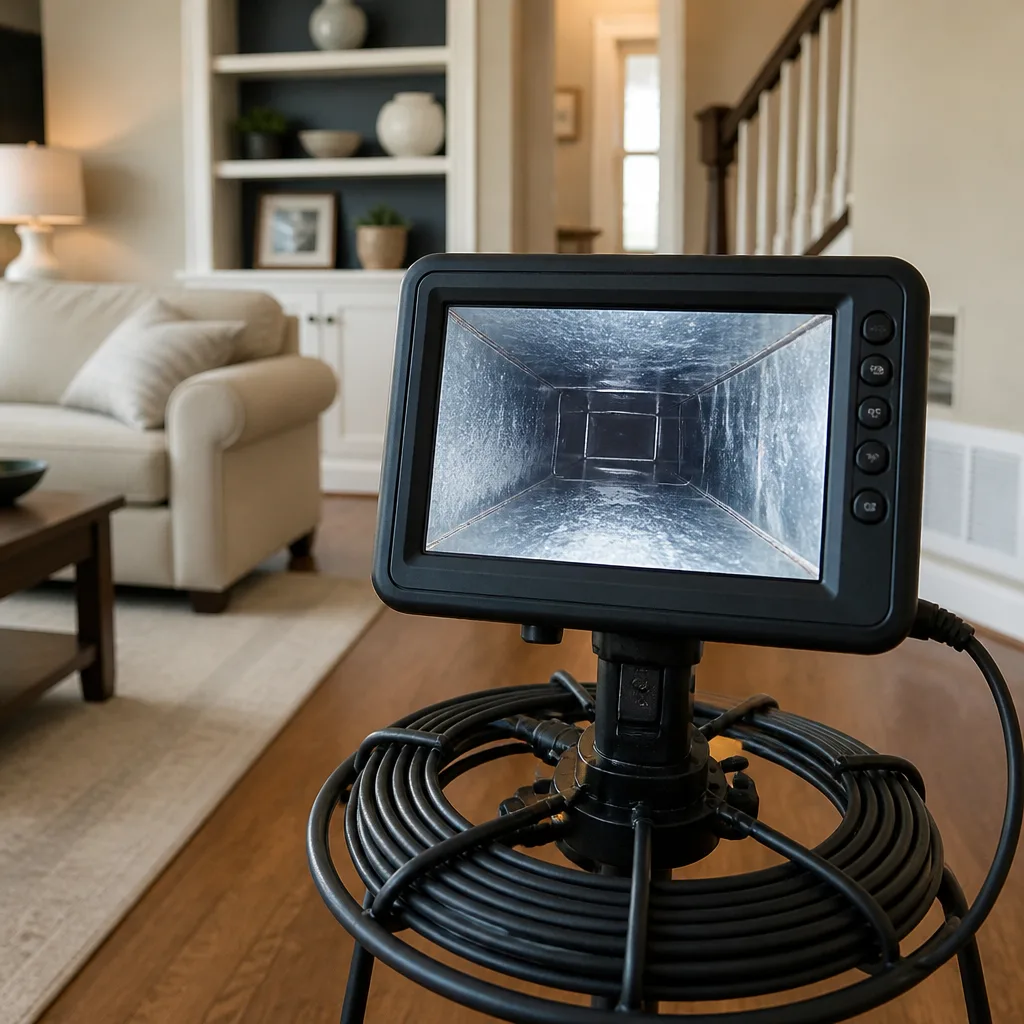 Camera inspection
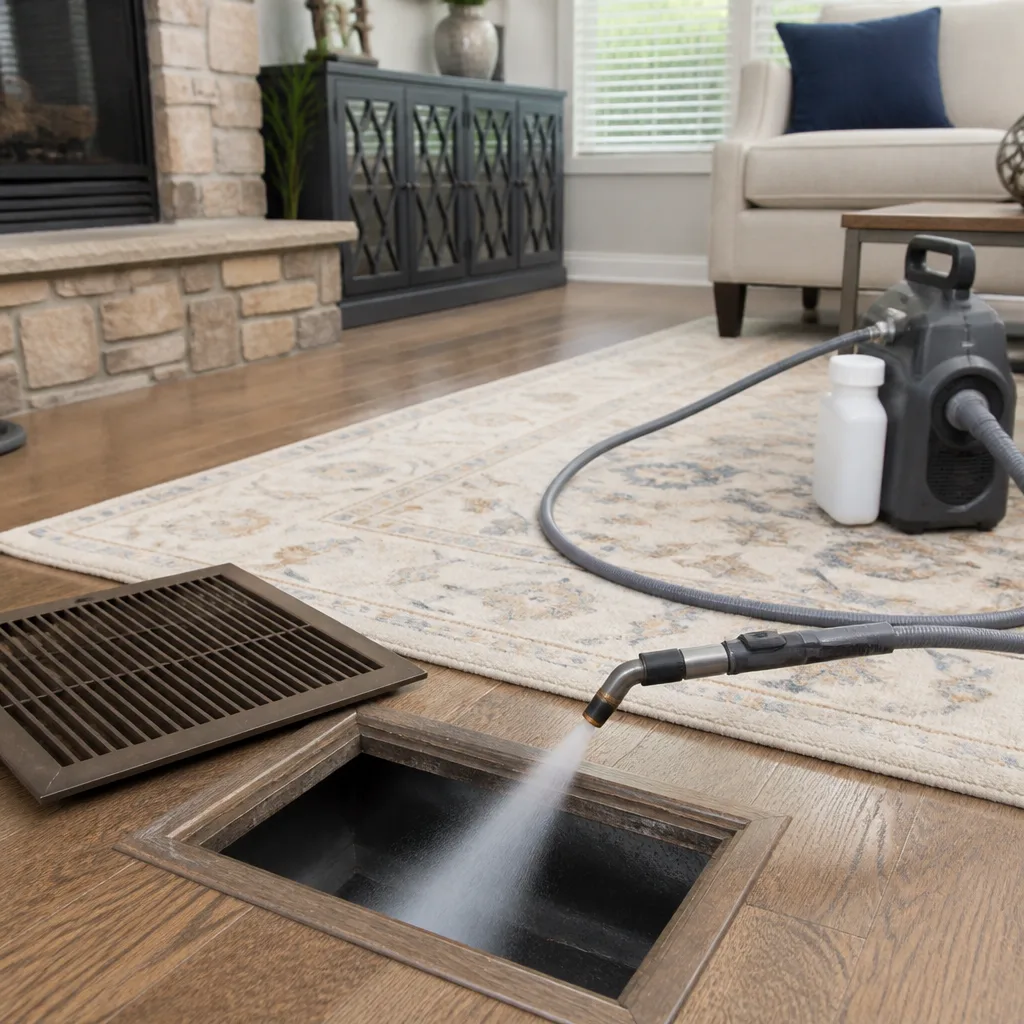 Sanitizing & deodorizing
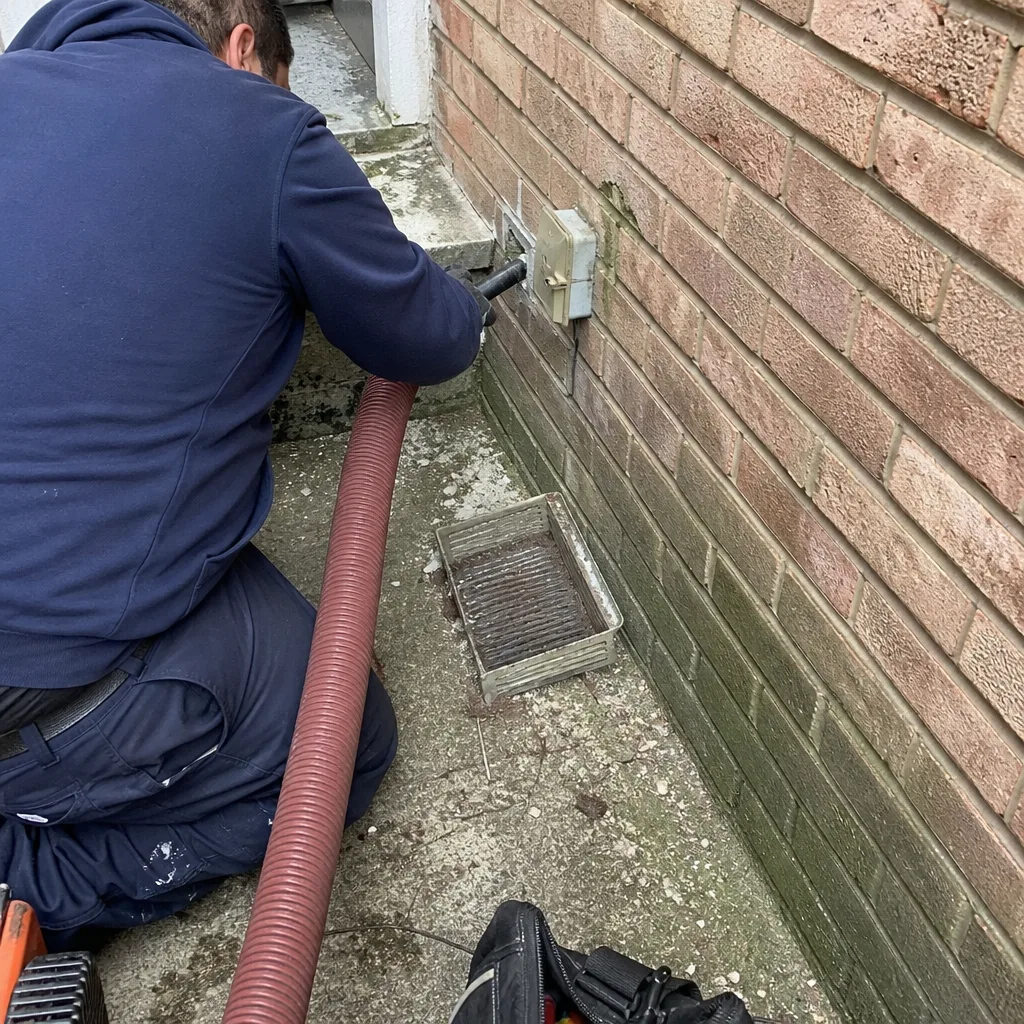
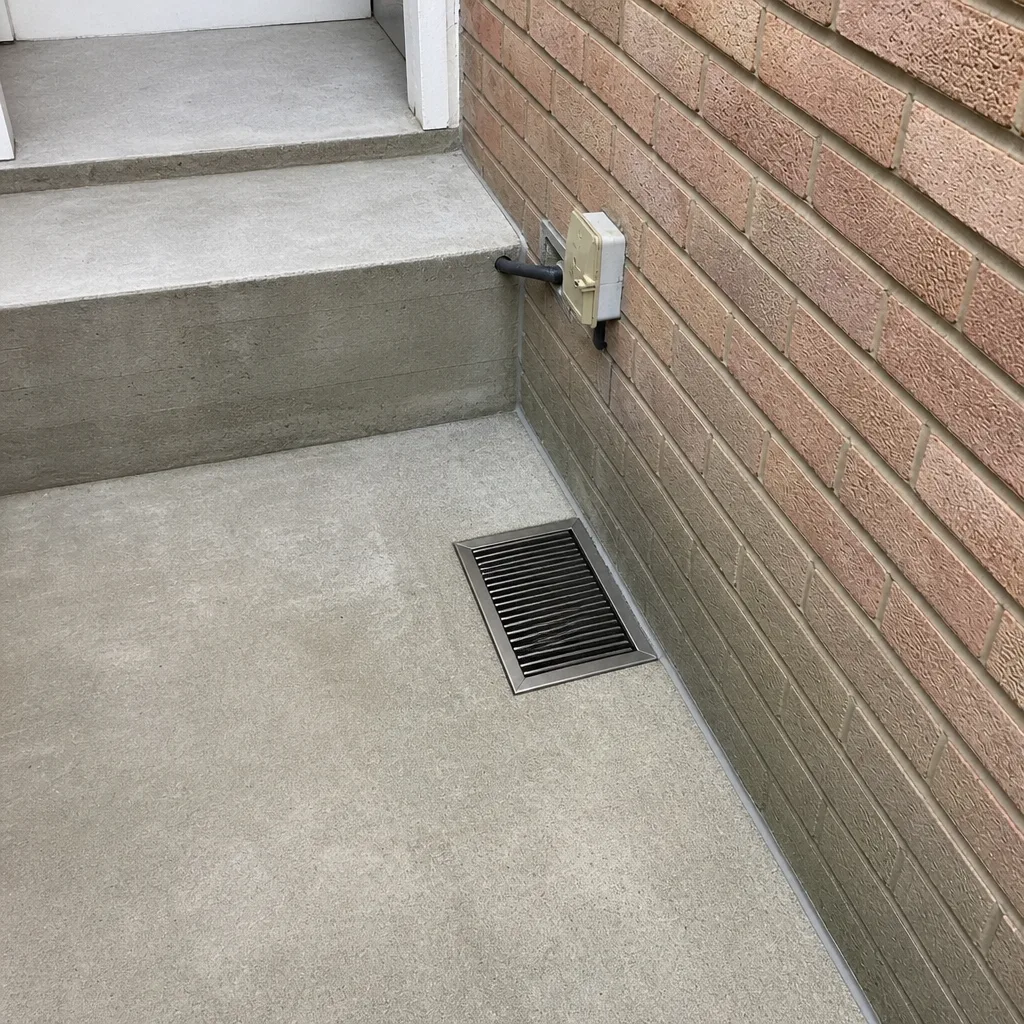
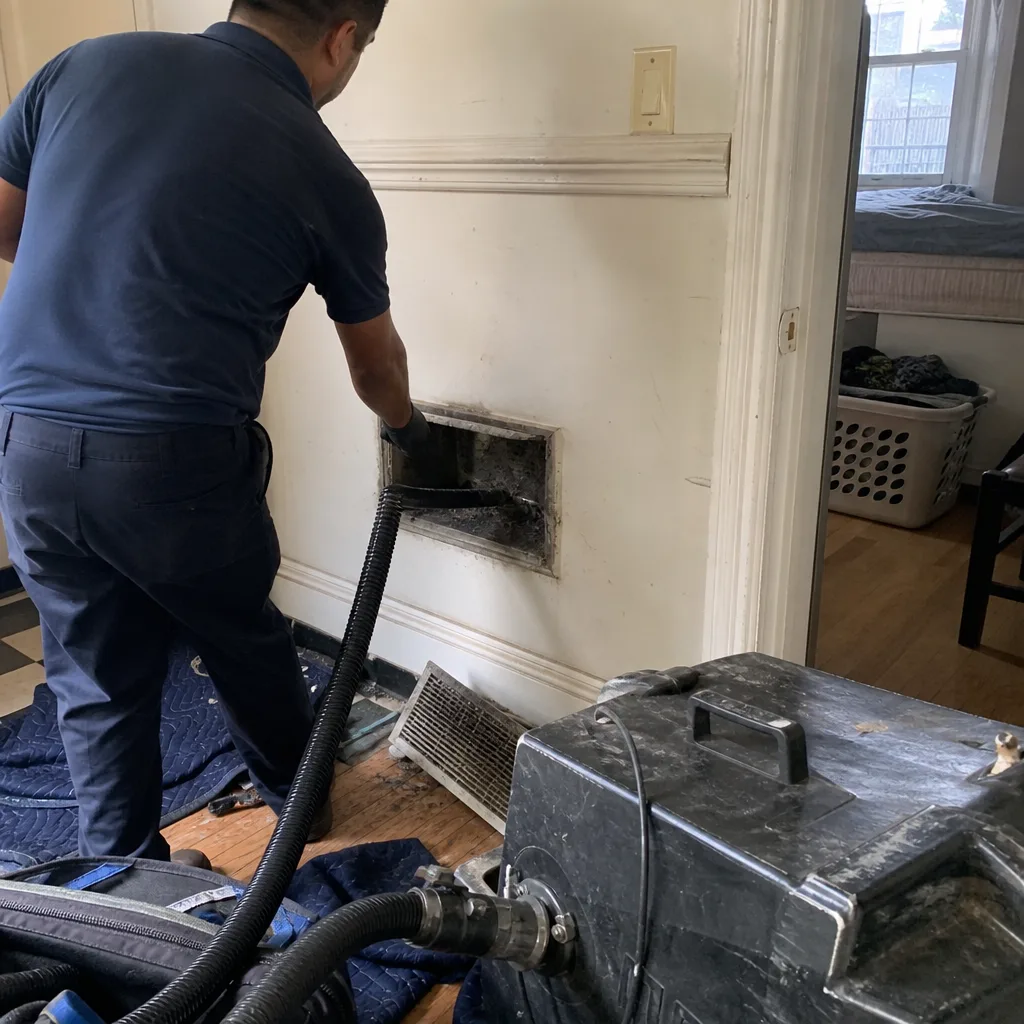
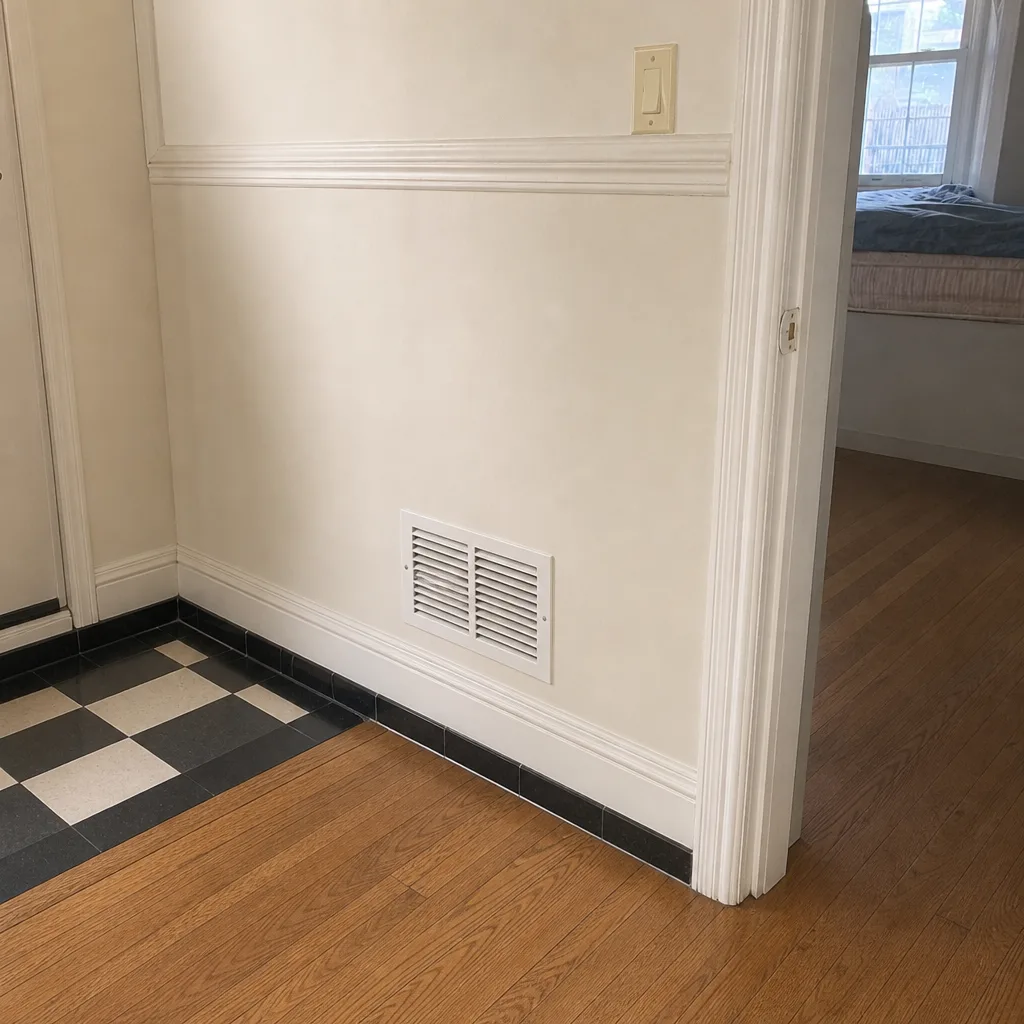
Whole-system duct and dryer vent check with before-and-after photos - you see exactly what came out of your vents
That "$99 whole-house special" is a bait ad - the real number appears once they are in your hallway, or the "clean" is a shop-vac at the register. We photograph the inside of your ducts before and after instead.
How to Hire an Air Duct Cleaning Contractor in Hell’s Kitchen: A Step-by-Step Guide
Most people assume the contractor they hire will clean their ducts to some kind of official standard. In New York, there is no state license specific to air duct cleaning, which means the barrier to putting a logo on a van and calling yourself a professional is close to zero. The vetting, then, is on you, not on a regulator. This guide walks through the specific equipment questions to ask by name, how to read a quote line by line, what NYC building paperwork you should actually request, and what a legitimate full-house duct cleaning looks like versus a surface pass. It is written from Hell’s Kitchen, where prewar shafts, co-op boards and tight hallways make the wrong hire expensive.
Quick Answer
To hire an air duct cleaning contractor in Hell’s Kitchen, ask for the specific equipment they use (Rotobrush, Nikro, Abatement Technologies are standard names), request their current insurance certificate with limits appropriate for your building, get a written whole-system quote with no per-vent pricing, and confirm they create negative pressure with proper containment before opening any access point. NADCA membership is a useful filter but not a guarantee. If a contractor can’t name their systems or explain how they contain dust in a Hell’s Kitchen apartment, keep calling.
Styles & brands we work with
- Whole-home duct cleaning
- Dryer vent cleaning
- Camera inspection
- Sanitizing & deodorizing
Table of Contents
- Why Hiring for Duct Cleaning in Hell’s Kitchen Is Harder Than It Looks
- Which Equipment to Ask About by Name
- What NADCA Membership Means (and Doesn’t)
- Access Points, Negative Pressure, and Containment: The Real Interview
- How to Read a Duct Cleaning Quote
- NYC Contractor Verification: Insurance, Coverage, and Paperwork
- What “Whole House Duct Cleaning” Should Include
- Common Mistakes to Avoid
- When to Call a Professional
Why Hiring for Duct Cleaning in Hell’s Kitchen Is Harder Than It Looks
Hell’s Kitchen is a mix of prewar walk-ups west of Ninth Avenue, mid-century co-ops on the avenues, and newer high-rises closer to the Hudson. That mix matters for duct work because the systems inside those buildings are wildly different. A 1930s prewar co-op might have a shared riser or a heat-pump retrofit with a tight closet unit. A newer tower might have individual vertical stacks serving each apartment. What a contractor does for one is not the same as what they do for the other, and the same guy with the same shop vac will arrive for all three.
The residential duct cleaning market in NYC rewards visibility and volume, not technical depth. A van-and-vacuum operation can run ads in Hell’s Kitchen, arrive with a portable shop vac, and be gone in an hour with a bill that reads “cleaned ducts.” Nothing about that visit is illegal, because there’s no code specific to residential duct cleaning to break. What you’re actually vetting for is whether the contractor is set up to do the job right: contain the dust, create negative pressure, and reach the whole system, not just the grilles they can see from the front door.
We’ve watched the difference between a residential-grade pass and a professional-grade one come down to three things every time: the mechanical cleaning equipment, the negative-air equipment, and whether the technician understands the specific duct layout they walked into. Everything else in the vetting guide below is built around confirming those three.
Which Equipment to Ask About by Name
The single fastest way to filter contractors is to ask, “What equipment do you use?” and listen for brand names. A professional answers with specific systems. An underequipped operator answers with a vague phrase like “our equipment” or “the professional machines in the truck.” You want the former, and here is why it matters.
- Rotobrush. A rotary-brush system that mechanically agitates and pulls debris from inside the duct wall rather than just vacuuming the surface. Ask if they use it, or an equivalent rotary brush, on supply and return runs.
- Nikro. A commercial-grade negative-air vacuum line used to pull contaminants out of the system while it’s under containment. A shop vac cannot substitute for this in a multi-room system.
- Abatement Technologies. Containment and negative-pressure units originally built for remediation work. If a contractor is running this on a routine residential job, you’re looking at a commercial standard.
- Honeywell and Aprilaire. Two brands common in whole-home filtration and humidity control systems. If your building has a central air handler with these components, ask how the contractor will clean around them without damaging the media or the fan.
You are not expected to become an expert in these systems. You are just listening for whether the contractor can speak about them fluently. Anyone who has actually run a Rotobrush or Nikro truck can describe what a rotary brush does inside a flex run, why negative pressure matters, and where a system breaks down. Someone who has never seen the equipment in a working setup cannot fake that conversation for more than a minute.
What a bad answer sounds like
“We use the most advanced equipment available” tells you nothing. “We’ve got a truck with everything” tells you less. If you push and the contractor still can’t name a single manufacturer or describe a single piece of machinery, you’re likely talking to a reseller who subcontracts, or to an operator whose real equipment is a vacuum and a broom.
What a good answer sounds like
You should hear two distinct parts of the answer. Part one is the mechanical cleaning system (Rotobrush or equivalent rotary brush). Part two is the negative-air containment system (Nikro or Abatement Technologies or equivalent). Both are required. A contractor with only one is not fully equipped to do the job without pushing dust into your living space.
What NADCA Membership Means (and Doesn’t)
NADCA stands for the National Air Duct Cleaners Association. It publishes the ACR, the industry’s accepted standard for duct cleaning assessment, cleaning, and post-cleaning verification, and it runs a certification program for technicians. Membership is a meaningful signal. It is not a guarantee.
Here is what it filters:
- What it confirms: The contractor has taken the step of joining a professional association with a code of ethics and an industry standard, and in many cases has technicians who have gone through a certification exam.
- What it doesn’t confirm: The condition of their equipment on the day of your job, whether that equipment shows up on site, whether the crew actually follows the ACR, or whether the quote you received will end up matching the invoice.
So treat NADCA as one filter among several, not the only one. It’s easy to verify and useful to ask about, but the real questions about equipment and containment still apply even to a member. We’ve seen quotes in Hell’s Kitchen that waved the NADCA card and still lacked any line about negative pressure.
How to use it correctly
- Check the association’s member directory directly. Don’t rely on a badge on the website.
- Ask which technicians on your job hold the certification, not just the company.
- Move on to the equipment and containment questions regardless of the answer.
Treat it the way you’d treat any professional affiliation: useful context, not a substitute for your own verification.
Access Points, Negative Pressure, and Containment: The Real Interview
This is the section that separates serious contractors from everyone else. Ask any contractor who shows up in Hell’s Kitchen how they plan to create negative pressure in your apartment and where they will cut access. How they answer tells you whether they’ve ever actually done the work in a building like yours.
Negative pressure means the cleaning system is pulling air from your living space into the vacuum, not pushing air from the ducts out into the room. Without it, the “cleaning” spreads dust, debris, and whatever is growing in the ducts into your air. Containment is the physical barrier, usually a HEPA-filtered enclosure, that keeps the working area sealed while the vacuum runs.
Questions that separate candidates
- “Where will you cut access points, and will you patch them after?” A pro can name where on the trunk line and each branch they expect to cut. An operator who plans to clean only through the floor registers is not doing a full job.
- “How will you seal off the return before you start?” In Hell’s Kitchen prewars, returns often sit in a shared closet or corridor. The contractor should have a plan for isolating the work zone from the rest of the apartment.
- “What filter rating are you using on the negative-air unit?” HEPA is standard. Anything lower is not adequate containment.
- “How do you handle a unit that shares a riser with the apartment above?” In older Hell’s Kitchen buildings, duct runs can be tied to neighboring units. The contractor should understand the fire damper situation and know not to disturb it.
We’ve learned to ask the access question in the initial call because it saves everyone a wasted visit. A contractor who plans properly before arriving is not the same person who opens a closet and starts cutting.
How to Read a Duct Cleaning Quote
A legitimate quote for air duct cleaning in Hell’s Kitchen should be itemized by system, not priced per vent. If yours says “$29 per register,” it’s a teaser, and you should expect the real number to arrive after the technician is inside.
Here is what a proper written quote includes at minimum:
- Scope of work in plain terms. Supply runs, return runs, main trunk, plenum, and any air handler components should each be named.
- Equipment named. Rotobrush or equivalent rotary brush for mechanical cleaning, and a named negative-air system (Nikro or Abatement Technologies are standard references) for containment.
- Access plan. Where cuts will be made, and whether patching and finishing are included.
- Sanitizing scope. Whether a post-clean treatment is included, and what product is used. Guardsman-grade treatments are common in professional work.
- Before-and-after photos. Written into the quote, not mentioned only after the invoice is presented.
- One flat price per system. Agreed before work starts. This is the real protection against the low-coupon-then-big-invoice move.
If any of those are missing, ask why. A contractor who quotes on the phone without seeing the system can’t produce a real quote, and one who won’t put these items in writing is telling you how the invoice will look.
NYC Contractor Verification: Insurance, Coverage, and Paperwork
For a Hell’s Kitchen apartment or brownstone, you need to see a current certificate of insurance (COI) before anyone walks in the door. Request it by email, check the policy dates, and confirm the limits make sense for the building you live in. For a single apartment inside a multi-unit residential building, most co-op boards and management companies expect general liability coverage in the millions, because a mishandled job in a shared corridor is a shared problem.
Here is what to ask for:
- Certificate of insurance. Current, listing the contractor’s business name you actually hired. The dates matter more than the paper.
- General liability limits. Higher is better, and the number should match what your co-op or building management asks for. Ask them before you book.
- Workers’ compensation. If a crew member is injured in your home, this is what stands between you and a claim. Ask for the certificate.
- Business entity. A searchable LLC or corporation with a real address and phone number is a floor, not a ceiling.
- Subcontractor disclosure. Ask if the crew arriving is their own technicians or a subcontracted crew. The answer affects who is accountable.
None of this is unusual to request from a professional contractor. A crew that’s set up properly has these documents ready to send. A crew that doesn’t has just told you something important.
If your building also has older ductwork that may have separated at seams or flexed joints, ask about duct repair and sealing as part of the same visit. It’s cheaper to address both in one job, and a system with leaks is a system that will need cleaning sooner. For day-to-day service across the neighborhood, our Air Duct Cleaning Hell’s Kitchen page covers the full scope.
What “Whole House Duct Cleaning” Should Include
“Whole house duct cleaning” should mean the entire duct system serving your living space, not the visible grilles. If the quote doesn’t specify the following, the job is likely to be a surface pass dressed up with a whole-house label.
- All supply registers and the runs behind them. Every room serviced by the system, not just the ones easiest to reach.
- All return registers and the return trunk. Often overlooked, and usually the dirtiest part of the system.
- The main trunk line. Cleaned with mechanical agitation, not just vacuumed at one access point.
- The air handler and blower compartment. If the system has one. Cleaning the ducts without cleaning the air handler is like washing the pipes and leaving the pump dirty.
- The evaporator coil. Where accessible and appropriate. A coil that’s been growing dust and spores will re-contaminate the ducts within weeks if it’s skipped.
- Post-clean verification. Before-and-after photos of access points, not just the visible registers.
If your building has a Honeywell or Aprilaire filtration or humidity system integrated with the air handler, ask the contractor how those components are handled. A contractor familiar with those systems knows to isolate them before cleaning rather than clean around them and hope. Full air duct cleaning in a Hell’s Kitchen apartment usually takes half a day or more for a full-scope job. If a quote implies an hour, it’s a surface pass.
And if the building has a clothes dryer vent run, ask about dryer vent cleaning in the same visit. Lint accumulation in a long dryer run is a known fire risk, and most duct-only companies won’t touch it.
Common Mistakes to Avoid
- Hiring on price alone. A quote that’s dramatically lower than the others is usually lower because something is missing: negative pressure, containment, mechanical cleaning, or all three. In Hell’s Kitchen, low-ball quotes often turn into the biggest invoices.
- Not asking for equipment names before booking. If you don’t ask upfront, you find out when the technician arrives with a shop vac. Ask the question on the phone.
- Skipping the COI request. For co-op and rental buildings alike, an uninsured contractor inside your home is your problem, and the building’s. Ask by email and read the dates.
- Accepting per-vent pricing. Per-vent pricing gives the contractor an incentive to charge more as work expands mid-job. A flat price per system, agreed in writing, is your protection.
- Believing a phone-only quote is a real quote. Duct systems vary by building type, and no credible contractor can price one without seeing it. If you’re quoted a firm number on the phone, it’s a placeholder.
- Choosing a service that only cleans. Many problems that prompt a cleaning are actually duct problems (loose seams, separated joints, torn flex runs, contaminated coils) that need repair, sealing, or sanitizing, not just vacuuming. A single-scope contractor can’t fix them.
- Forgetting post-clean sanitizing and verification. Cleaning removes dust. Guardsman-grade sanitizing treatments target the allergens, mold spores, and microbial contamination that dusting alone leaves behind. Skipping it means the first warm day reactivates whatever was in the system.
When to Call a Professional
Duct cleaning isn’t a routine chore on a strict schedule. It’s driven by symptoms. Call a professional when you notice one or more of the following:
- Visible dust plumes from registers when the system turns on.
- Persistent musty or stale air in specific rooms, even with a clean home.
- A recent renovation that generated drywall dust, sawdust, or construction debris in the HVAC system.
- Allergy or asthma symptoms that get worse indoors and ease when you leave.
- An aging system, or one whose filter hasn’t been replaced as often as it should have been.
- A dryer that takes noticeably longer than it used to, or a lint trap that never seems to catch everything.
For apartment dwellers and brownstone owners across Hell’s Kitchen, Air Duct Cleaning Hell’s Kitchen offers free estimates – call (833) 468-5937. We answer 24/7. Fast dispatch from 7am to 7pm, Sunday through Friday.
If your building has a central HVAC system and hasn’t had HVAC cleaning in years, that belongs in the same conversation.
See the difference
 Before
 After
 Before
 After
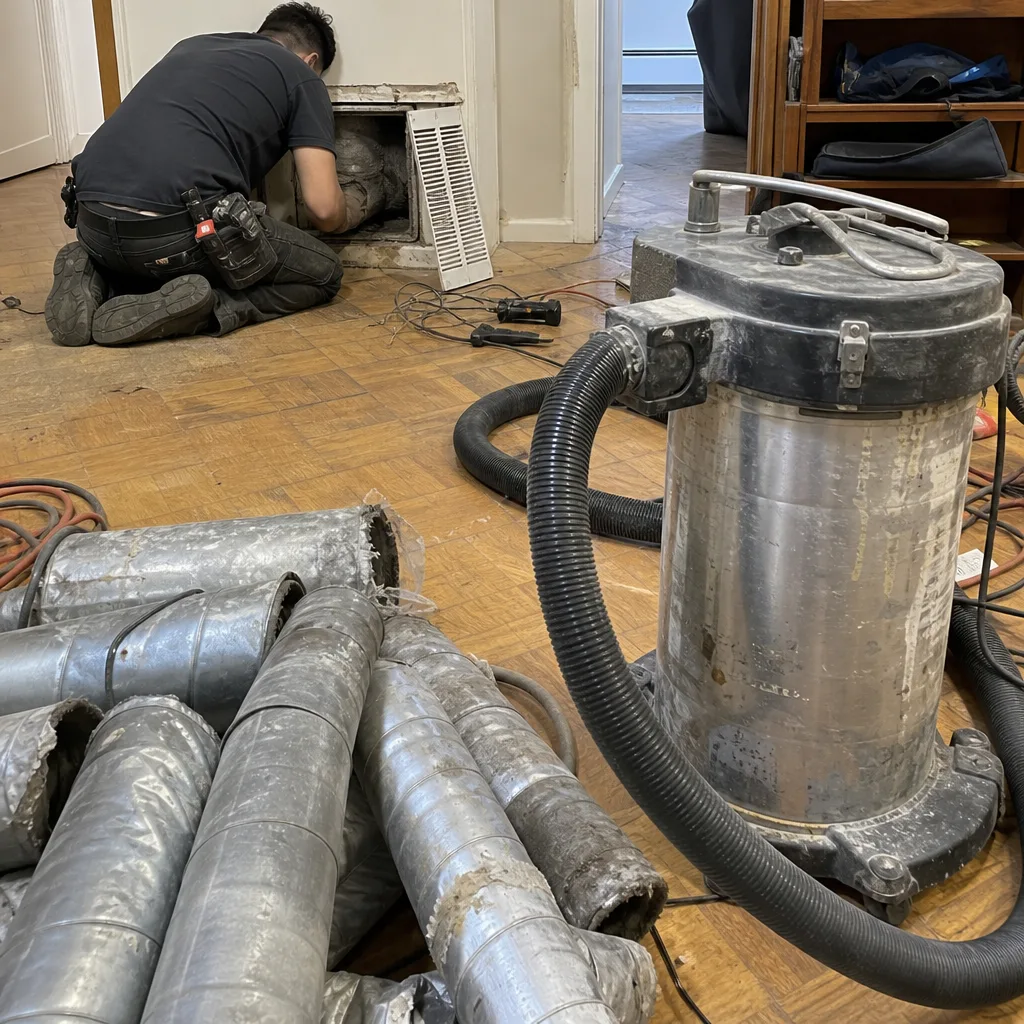 Before
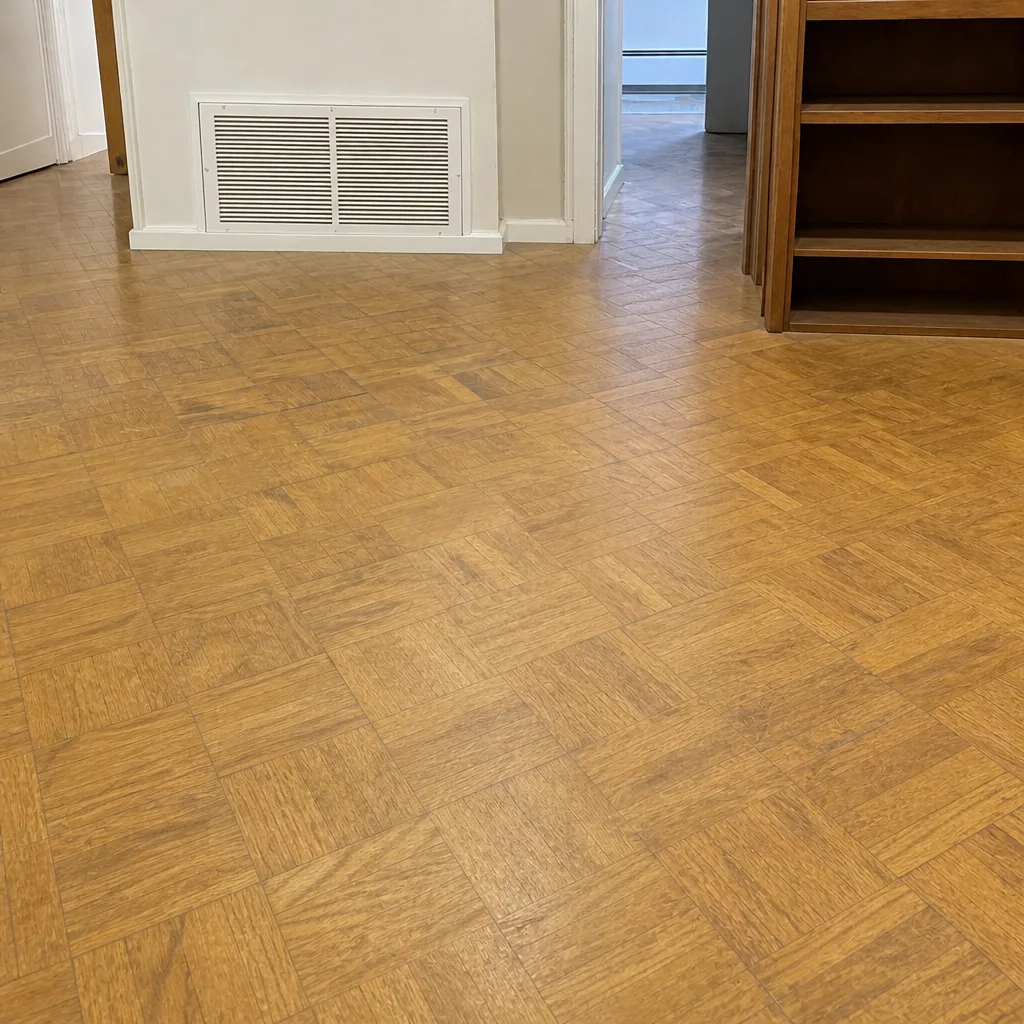 After
Frequently Asked Questions
Duct cleaning is priced per system, not per vent, and the final price is set by a written estimate after a technician sees the layout. A studio or one-bedroom runs less than a prewar two-bedroom with long duct runs, and a job that includes duct repair, sealing, and sanitizing is priced differently from a cleaning alone. Be very cautious of any quote given as a per-vent or per-register number, because those prices are built to expand once the technician is inside. Call (833) 468-5937 for an exact quote – estimates are free.
The cheaper quote is usually cheaper because of what it leaves out: negative pressure, HEPA containment, mechanical agitation with a rotary brush, and post-clean sanitizing. A vacuum and a brush can clean the visible grilles in an hour, but it can’t clean the trunk line, the return, or the plenum, and it doesn’t contain the dust that’s redistributed. In Hell’s Kitchen, the cost of a low quote is usually paid later, in a bigger invoice or a rig that needs cleaning a second time. Call (833) 468-5937 to compare against a whole-system number.
Ask for before-and-after photos of the access points the contractor opened, not the room-facing grilles. A properly equipped contractor photographs inside the system, patches access points cleanly, and walks you through what they found. If your contractor can’t show you photos and can’t explain which runs and which trunk sections were cleaned, the work is hard to verify. Call (833) 468-5937 to ask what documentation a Hell’s Kitchen estimate includes.
For most Hell’s Kitchen apartments, every three to five years is the rough rhythm, but the trigger is symptoms, not the calendar. A building that just had a renovation, a home with pets or allergies, a system whose filter has been neglected – those jobs come up sooner. If you’re seeing dust plumes at the registers or noticing musty air, the schedule is now. Call (833) 468-5937 to talk through what your building actually needs.
Residential duct cleaning itself typically doesn’t require a permit, but cutting new access points or making structural changes can, and the rules vary by building type and by whether the work touches a shared riser. Ask your co-op board or building management before hiring, and ask the contractor what their access plan involves. A contractor familiar with Hell’s Kitchen prewar and co-op buildings will have done this conversation before and will say so.
Not specifically for duct cleaning, because New York State does not license the trade. There are no legal requirements specific to duct cleaning. What you can and should verify are the business entity, current general liability and workers’ compensation insurance, and the equipment the contractor brings. That’s the real vetting. Call (833) 468-5937 and we’ll walk you through what a Hell’s Kitchen estimate from a properly equipped contractor includes.
The Bottom Line
Hiring a duct cleaner in Hell’s Kitchen is a vetting job, not a price-shopping job. Ask for equipment names (Rotobrush, Nikro, Abatement Technologies, or you should be asking why not). Treat NADCA membership as one filter, not the answer. Request a current certificate of insurance with limits that satisfy your building. Get a flat price per system in writing, not per vent. Make sure the scope names the return, the trunk, the air handler, the sanitizing step, and the before-and-after photos. And if something in the building needs sealing, repairing, or full-scope air duct cleaning in Hell’s Kitchen, make sure the contractor can do all of it in one visit. That’s the difference between a cleaning and a fix.
Air Duct Cleaning Hell’s Kitchen provides air duct cleaning, dryer vent cleaning, HVAC cleaning, duct repair and sealing, and air quality sanitizing across Hell’s Kitchen. Every job is priced per system with a written estimate before work starts. Our technicians have up to 14 years of experience, and the equipment is industrial-grade: Rotobrush, Nikro, Abatement Technologies. We work with Honeywell and Aprilaire systems when buildings have them. For a free estimate in Hell’s Kitchen, call (833) 468-5937. We answer 24/7. Fast dispatch from 7am to 7pm, Sunday through Friday.
Written by the team at Air Duct Cleaning Hell’s Kitchen.